The Molecular Identity Integration Model™ (MI²™)
The Scientific Framework for Identity Integration
The Inner Lab is a modern platform for understanding the architecture of the human self. Founded at the intersection of cognitive science, emotional intelligence, and identity research, our work explores one central question:
What allows a human being to experience a coherent and integrated identity?
While many personal-development approaches focus on motivation or behavioural change, The Inner Lab approaches identity as a structured system that can be mapped, understood, and integrated.
The MI²™ is the core framework of The Inner Lab — a structured, evidence-informed approach that explains how identity becomes fragmented and how it can be brought back into coherence.
The MI²™ is grounded in a simple but powerful principle: Human identity operates like a molecular system.
Each person carries distinct identity components — Scientist, Leader, Parent, Friend, and more. Multiplicity is not the problem. When identity parts are separated, hidden, or suppressed, the system requires constant regulation — experienced as chronic stress, fatigue, and inner conflict. When those parts bond into a coherent structure, stability emerges naturally — without effort or self-control.
This is neither therapy nor traditional coaching. It is a precision-engineered framework for understanding the deeper architecture of identity. The goal is structural integration.
What If Your Identity Works Like Chemistry?
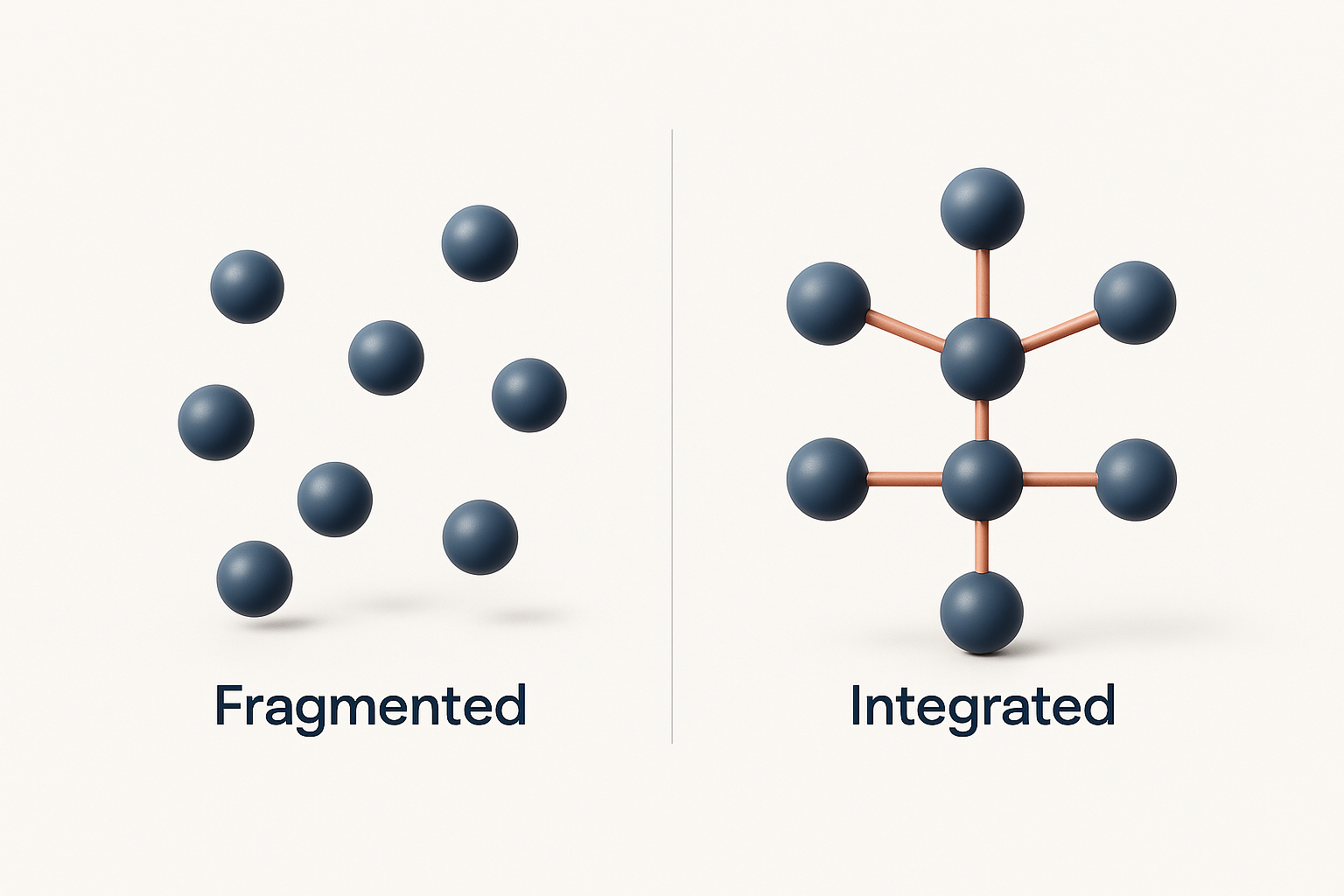
In chemistry, isolated atoms are unstable. They seek bonds. The same principle applies to identity.
When your identity parts operate in isolation — scientist at work, artist in secret, leader in public, parent at home — each part requires constant management. This is fragmentation.
The results are:
- Chronic stress (even when everything looks fine)
- The feeling of performing everywhere, belonging nowhere
- Exhaustion from managing multiple “versions” of yourself
When identity parts are able to bond — to coexist, interact, and reinforce each other — the system stabilises. Stress reduces. Authenticity emerges.
Identity fragmentation happens when different parts of us operate with conflicting beliefs, emotional patterns, or survival strategies. The MI²™ maps these “identity molecules” and shows how they interact, compete, or disconnect from one another. Once mapped, they can be integrated into a coherent whole.
You’re not broken. Your identity system may simply be unbonded.
Scientific Foundations of the MI²™
The MI²™ synthesizes four scientific domains into an applied identity integration framework:
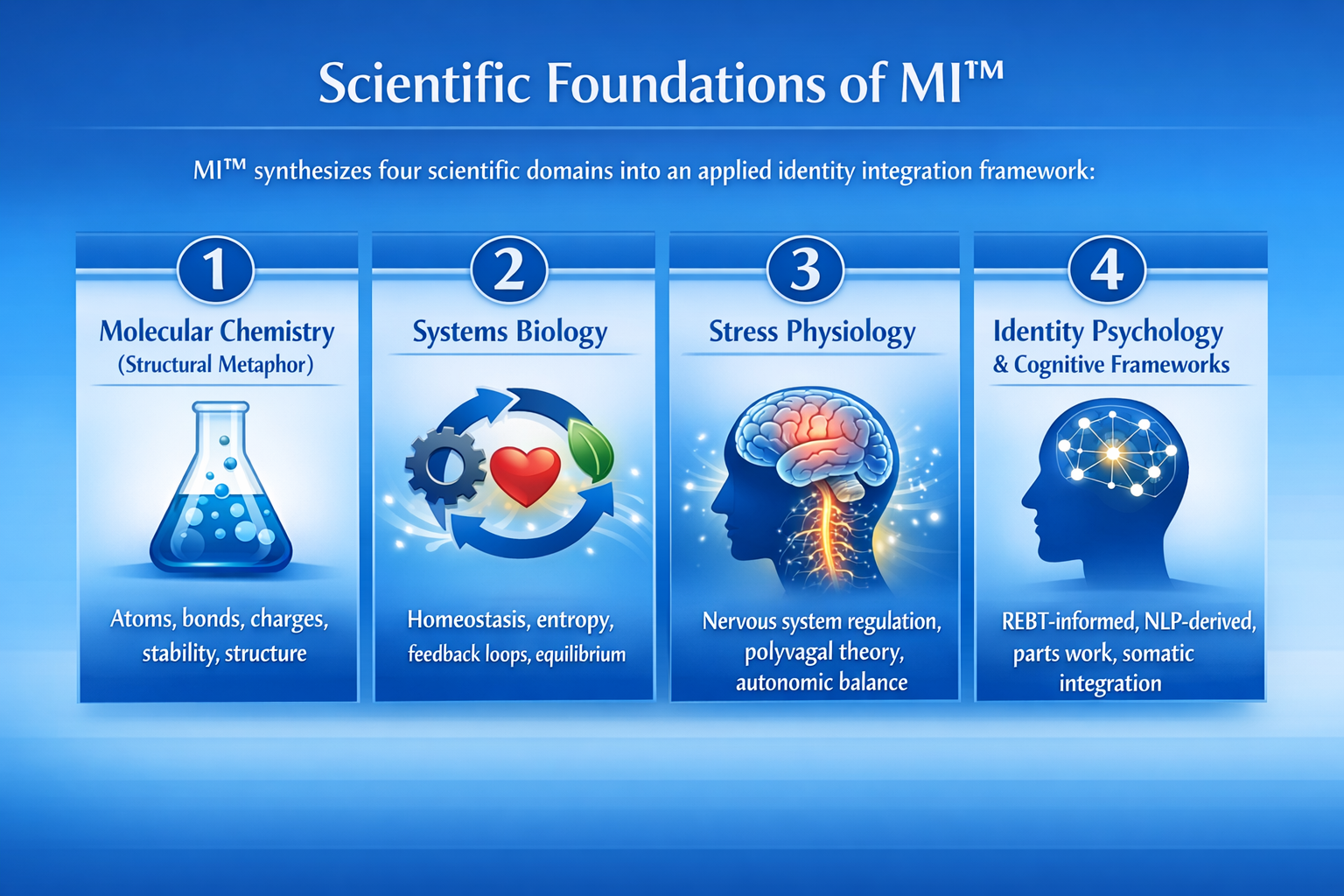
Molecular chemistry
Atoms, bonds, charges, stability, structure
Systems biology
Homeostasis, entropy, feedback loops, equilibrium
Stress physiology
Nervous system regulation, polyvagal theory, autonomic balance
Identity psychology
REBT-informed, NLP-derived, parts work, somatic integration
How Identity Actually Works
The Structural Architecture of Identity Integration
The MI²™ maps identity through five structural components:
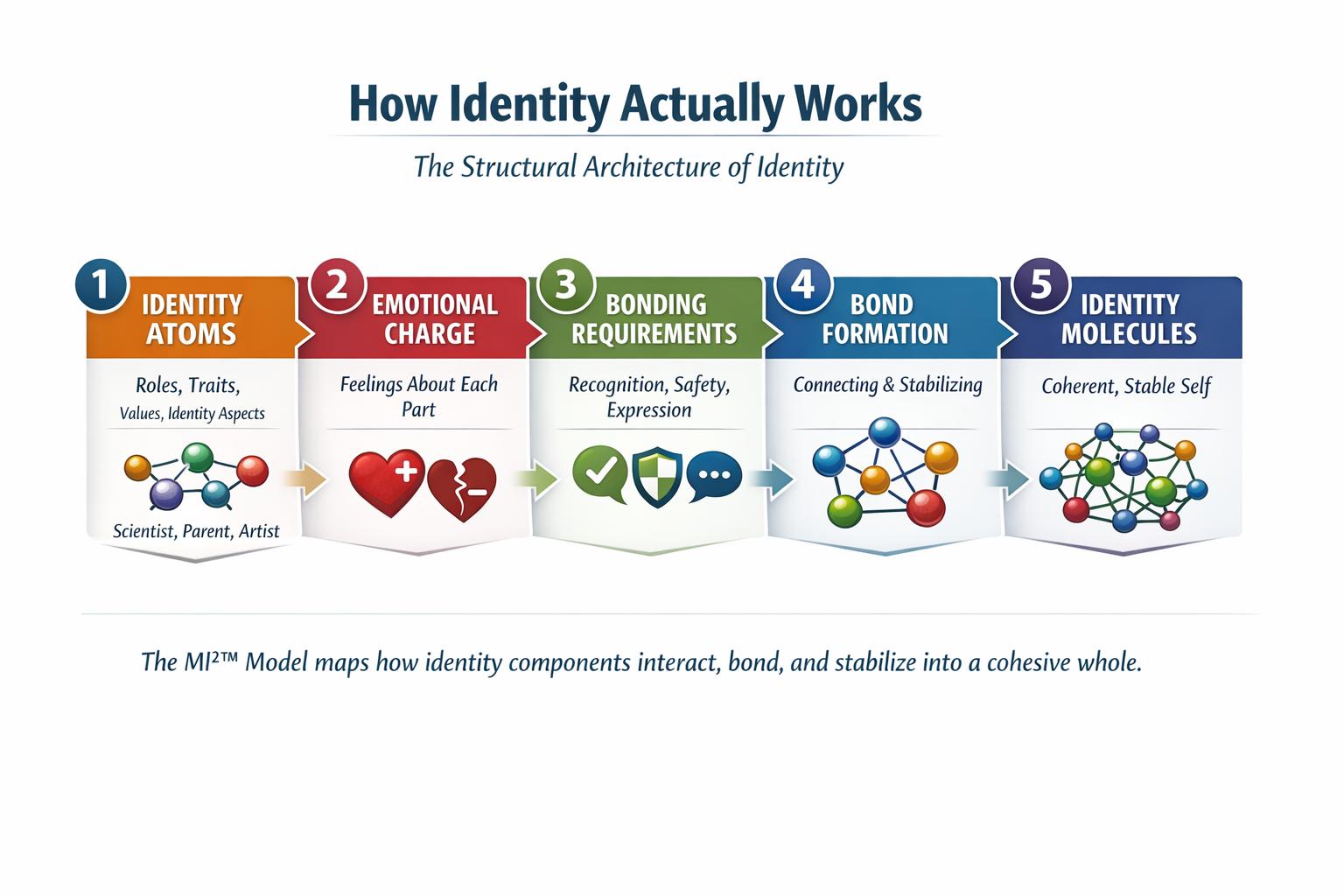
- Identity atoms — The distinct parts that make up who you are — roles, traits, values, and identity aspects (e.g., Scientist, Parent, Artist).
- Emotional charge — The positive or negative valence attached to each atom — how you feel about each part of yourself.
- Bonding requirements — What each atom requires to bond — recognition, expression, safety, or integration with other parts.
- Bond formation — The process of connecting atoms into stable relationships — allowing parts to coexist and reinforce each other.
- Identity molecules — The integrated structure that emerges when atoms bond — a coherent, stable sense of self across all contexts.
These five components form the structural language of the MI²™ — allowing identity to be mapped, understood, and systematically integrated.
The Integration Process
The MI²™ works through four structural stages:
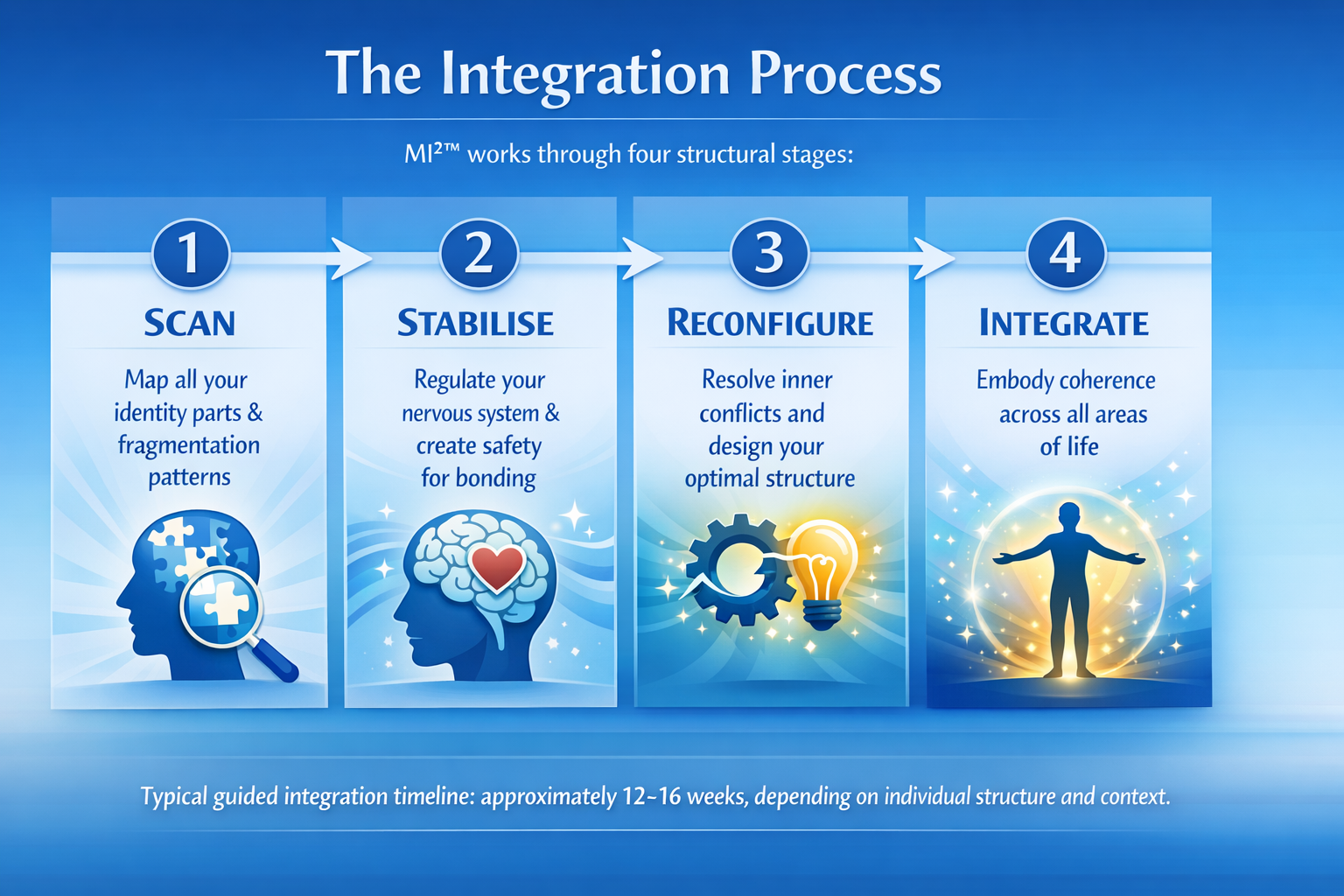
Scan
Map all your identity parts & fragmentation patterns.
Stabilise
Regulate your nervous system & create safety for bonding.
Reconfigure
Resolve inner conflicts and design your optimal structure.
Integrate
Embody coherence across all areas of life.
Typical guided integration timeline: approximately 12–16 weeks, depending on individual structure and context.
Measured Results, Not Motivational Claims
The MI²™ is not a philosophical idea. It is a research-driven, applied framework. The Model was tested in a pilot application study with high-achieving professionals, with the following results (N = 20, 6-week pilot program):
*Results based on a small pilot application study and should be interpreted as preliminary findings.
These results are achieved without forcing behavioural change, emotional catharsis, or identity “reinvention.” Integration emerges as the system becomes coherent.
The MI²™ is built on earlier research, including the SSR™ Model, which has been published online. While the MI²™ is the current and more advanced model, the SSR™ publication provides the academic foundation and credibility behind this work.
View the publication on SSRN →
The MI²™ framework continues to evolve through ongoing applied research and observational study within The Inner Lab.
Why Integration Succeeds Where Transformation Approaches Often Fail
Sustainable change must be ecological. It must fit: your nervous system, your roles and responsibilities, your real life.
The MI²™ does not ask you to become someone else. It helps you integrate who you already are in your own environment.
The conventional advice to “find your one thing” often oversimplifies the complexity of human identity. You don’t need to choose. You need to integrate.
The Inner Lab — Designed for Complex Professional Lives
An international platform where the MI²™ framework is applied, taught, and further developed. A platform for identity integration, reflective work, and structured personal development — created by Dr. Svetlana Nikolić Poligenis. Based in Düsseldorf, working with clients across Europe and internationally. Programmes delivered in English, online and in hybrid formats.
Designed for individuals who value precision, evidence, and depth:
- High-achievers experiencing the success-disconnection paradox
- Multi-passionate professionals told to “pick one thing”
- Individuals fragmented across work, family, and personal values
- Leaders functioning well externally — while feeling absent internally
This is not self-help. This is structural integration for complex lives.
Experience the Framework
Two ways to begin exploring the framework